Guilty by Association: How Your Shared Hosting Neighbor's Spam Habits Are Destroying Your Email Reputation
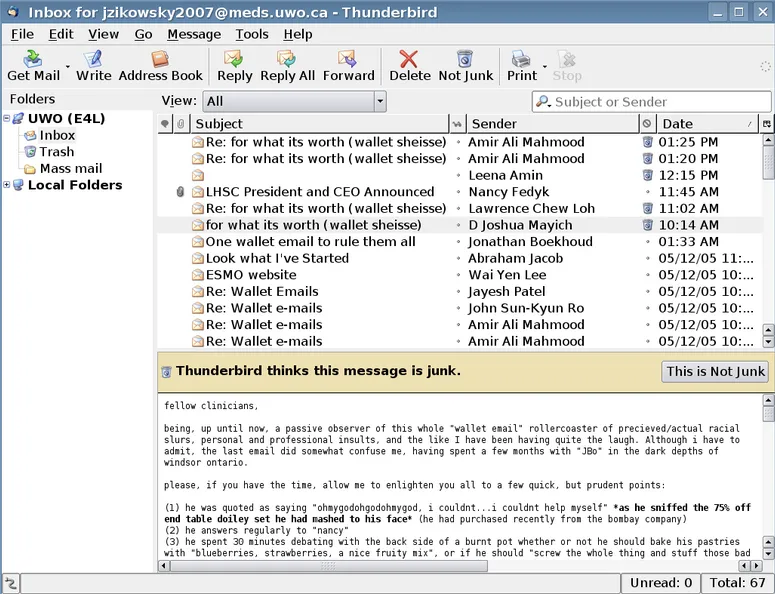
Photo: Original uploader to UWOMeds wiki was UWOMeds wiki user Tarek on 6 December 2005, 22:08.First uploader using this filename was Sceptre at en.wikipedia.Later version(s) were uploaded by SirGrant, Yoghurt at en.wikipedia. The current version of the i
Imagine running a legitimate business, crafting a carefully worded newsletter, building a subscriber list through entirely ethical means — and then watching your open rates collapse because the server sitting next to yours in a data center somewhere in Texas or Arizona belongs to someone operating a pharmaceutical spam ring. You did nothing wrong. Your content is compliant. Your list is clean. And yet Gmail, Outlook, and Yahoo Mail are routing your messages directly to the junk folder.
This is not a hypothetical. It is the routine reality of email deliverability on shared hosting infrastructure, and it affects a significant portion of the small business owners and independent publishers who rely on budget or mid-tier hosting plans to power their online operations.
How Email Reputation Actually Works
Every email message that leaves a server carries the IP address of the machine that sent it. Major inbox providers — Google, Microsoft, Yahoo, and others — maintain reputation scores associated with those IP addresses, updated continuously based on signals including spam complaint rates, bounce rates, spam trap hits, and blacklist appearances.
When a receiving mail server evaluates an incoming message, it queries the reputation of the sending IP as one of several factors in its filtering decision. A high-reputation IP increases the probability of inbox placement. A low-reputation or blacklisted IP dramatically increases the probability of the spam folder or outright rejection.
On a shared hosting server, dozens to hundreds of customer accounts may send email through the same pool of IP addresses. The reputation attached to those IPs is therefore a collective property — built up or degraded by the aggregate behavior of every account on that server.
The Economics of Cheap Hosting and Email Quality
Budget hosting providers operate on a business model that prioritizes density. Packing more customer accounts onto each server reduces the per-account infrastructure cost, which allows the provider to advertise lower prices. This density model creates a predictable email reputation problem.
A shared server with 500 accounts will almost certainly include at least a handful of accounts operated by senders with poor email hygiene — businesses sending to purchased lists, sites that have been compromised and are sending spam without the owner's knowledge, or simply inexperienced operators who are generating high bounce rates through list mismanagement.
Each of those bad actors degrades the shared IP reputation. Each degradation raises the filtering threshold that every other sender on that server must clear. The site owner who has done everything correctly ends up competing against the accumulated damage caused by people they have never met and cannot influence.
This is the structural flaw that no amount of careful list management on your part can fully overcome when you are operating within a shared IP environment.
Reading the Warning Signs in Your Metrics
Email deliverability problems caused by shared IP reputation tend to produce a recognizable pattern in campaign and transactional email metrics. Understanding what to look for allows you to identify the problem before it becomes catastrophic.
Declining open rates without content changes. If your open rate drops significantly across multiple campaigns despite consistent subject lines and send times, filtering — not disengagement — is likely the cause. Filtered emails are never opened, which pulls the open rate down even when recipients would have engaged with the content.
Provider-specific bounce or complaint patterns. Shared IP blacklisting often affects specific inbox providers before others. A sudden spike in bounces or filtering at Gmail addresses while Outlook delivery remains stable, or vice versa, can indicate that one major provider has downgraded the reputation of your sending IP.
Transactional email failures. Order confirmations, password reset emails, and account notifications that go undelivered are a more urgent signal than newsletter filtering. When transactional messages — which recipients are actively expecting — begin disappearing into spam folders, the IP reputation problem has become operationally serious.
Diagnosing Whether Your Host's IP Is the Problem
Several tools allow you to investigate the reputation of your sending IP directly, without relying on your hosting provider to disclose the information.
MXToolbox's blacklist checker queries dozens of major blacklist databases simultaneously and reports whether your sending IP appears on any of them. Google Postmaster Tools, available free to domain owners who send to Gmail addresses, provides reputation data broken down by domain and IP, including spam rate trends over time. Microsoft's Smart Network Data Services (SNDS) offers equivalent visibility into Outlook and Hotmail delivery.
If your IP appears on a major blacklist or your Postmaster Tools data shows elevated spam rates, the problem is confirmed. What you do with that information depends on the severity and your resources.
Strategies for Protecting Deliverability Without Leaving Your Host
The most complete solution to shared IP reputation problems is routing your outbound email through a dedicated email delivery service rather than your hosting server's mail infrastructure. Services such as Mailgun, Postmark, SendGrid, and Amazon SES operate dedicated IP pools managed specifically for email deliverability, with active reputation monitoring and abuse controls that shared hosting providers cannot match.
Integrating a transactional email API with your website typically requires modest technical effort — most platforms support these services through plugins or native configuration — and the cost for low to moderate sending volumes is often under $20 per month. For newsletters specifically, platforms like Mailchimp, ConvertKit, or ActiveCampaign handle the sending infrastructure entirely, removing your hosting server from the deliverability equation.
If migrating your sending infrastructure is not immediately feasible, several intermediate measures can limit the damage. Authenticating your sending domain with SPF, DKIM, and DMARC records does not repair a damaged IP reputation, but it signals to inbox providers that your domain is managed professionally, which can marginally improve filtering outcomes. Suppressing inactive subscribers and maintaining list hygiene reduces your bounce rate, which is one factor inbox providers weigh when assessing sender quality.
For businesses where email revenue is material — e-commerce stores dependent on cart abandonment sequences, media companies whose newsletters are a primary audience touchpoint — the cost of remaining on degraded shared IP infrastructure should be measured against the revenue impact of reduced deliverability. In most cases, the math favors the dedicated sending service.
The Infrastructure Decision Behind Every Email
Email deliverability is an infrastructure problem before it is a content problem or a list quality problem. When your messages are routed through IP addresses you do not control and cannot monitor, your sender reputation is partially determined by the behavior of strangers.
That is a risk that cheap hosting plans do not advertise and most site owners do not consider until their open rates collapse or a customer calls to ask why they never received their order confirmation. Understanding the mechanics of shared IP reputation transforms it from an invisible threat into a manageable one — but only if you act before the damage accumulates.